
A patient who doesn’t understand their prescription won’t follow it. Another who doesn’t feel comfortable asking questions leaves with doubts that continue to build. Supporting patients in their day-to-day lives depends less on the time spent in a consultation than on the quality of every interaction, however brief.
Adapt your language so patients remember what matters
Have you ever noticed a patient nodding during a consultation, then calling the next day because they can’t remember what to do? This gap between what is said and what is understood remains one of the most common obstacles in the care journey.
The problem rarely lies with the patient’s willingness. It lies in how the information is communicated. Terms such as “compliance” or “titration” mean nothing to most people sitting across from you. Replacing medical jargon with everyday words doesn’t water down the message—it makes it useful.
In practice, this means rephrasing every instruction as an action the patient can take. “Take your medication at the same time each day” works better than “ensure good therapeutic compliance.” Asking patients to repeat what they’ve understood in their own words also helps you spot any areas of confusion straight away.
The French-Quebec guide cited by Prescrire notes that health communication benefits from short sentences, everyday vocabulary and visual aids. Clear communication benefits everyone, not just people who have difficulty understanding. Among SanaVitae professionals, this structured approach to support is one of the recommended practices for improving the care provider-patient relationship.
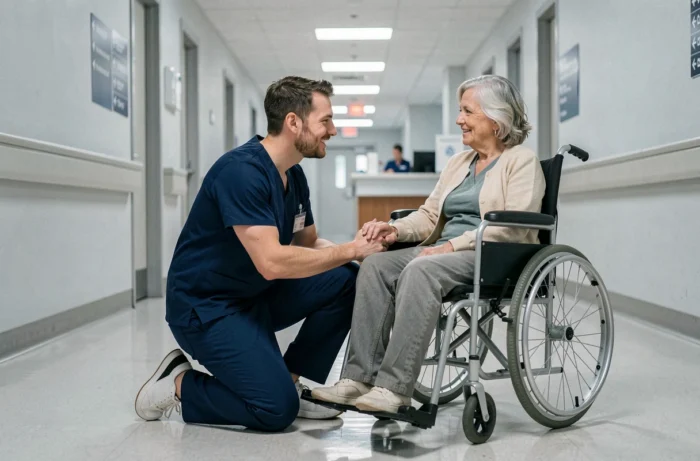
Patient therapeutic education: going beyond simply providing information
Informing a patient about their condition is not the same as supporting them. Information alone is passive. Therapeutic education aims to help patients manage their condition independently in their daily lives by teaching them practical ways to do so.
Patient therapeutic education (PTE) has been part of French legislation since 2009 and is recognised by the World Health Organization. It does not replace treatment. It complements it by helping people understand their condition, adapt their habits and recognise warning signs.
How PTE changes day-to-day practice
Healthcare professionals who incorporate PTE do more than prescribe. They develop a personalised programme tailored to each patient’s needs and abilities. This includes three complementary aspects:
- Teaching patients to monitor their own health indicators (blood pressure, blood glucose, pain) and respond to changes without always waiting for an appointment.
- Working on everyday adaptations: how to stay physically active despite a chronic condition, and how to manage interactions between diet and treatment.
- Regularly reassessing the skills patients have acquired, because motivation fluctuates and needs change as the condition progresses.
The HAS notes that any professional involved in a patient’s care can draw on PTE when appropriate, including during a routine prescription pickup at a pharmacy or a nursing appointment.
Patient partners: an underused resource in care coordination
Why limit patients to the role of care recipients? At Poitiers University Hospital, patient partners help train healthcare professionals and design therapeutic education programmes. Their lived experience of illness offers insights that clinical expertise alone cannot provide.
Patients’ experience is a distinct contribution to medical expertise, not merely a personal account. It helps identify points in the care journey where support is lacking, wording that causes confusion, or stages when people feel abandoned.
Including caregivers in the care journey
Support doesn’t stop at the relationship between healthcare professionals and patients. Caregivers (spouses, children and other loved ones) manage a significant part of day-to-day care: medication reminders, appointment management and emotional support.
Including them in consultations, providing clear explanations tailored to their needs and recognising their role in managing the condition improves patients’ quality of life and reduces gaps in follow-up. The HAS recommends asking patients about any difficulties they have following treatment and managing their condition in everyday life, involving those close to them when appropriate.

Digital coordination between healthcare professionals: beyond shared records
Having a digital tool is not enough to coordinate care. The rollout of Mon espace santé in nursing homes showed that having the software in place does not guarantee that patient records are actually updated. Information sharing should be limited to what is necessary and comply with patient access and consent rules.
Coordination between healthcare professionals relies on practical steps:
- Check that everyone involved has up-to-date information before taking action (allergies, recent treatment changes, specific instructions).
- Prioritise targeted handovers over exhaustive records that no one reads in full.
- Make sure patients know who is responsible for what in their care journey so they can flag anything that has been missed or seems inconsistent.
Patients who are well informed about how their care is organised become active participants in coordinating it. This also helps strengthen trust with every professional involved.
Supporting patients doesn’t depend solely on complex programmes. It comes down to explaining things clearly, providing consistent and appropriate follow-up, and treating each person as an active participant in their own health. Professionals who take this approach in their day-to-day work see fewer gaps in care and greater patient engagement in treatment.