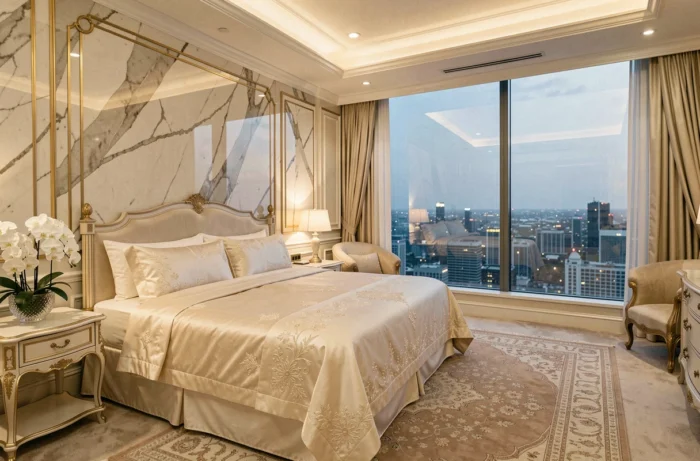
The ultra-luxury hotel segment operates on a structural paradox: no country officially recognizes the sixth star. National ranking systems cap at 5 stars, whether it is the Atout France system, Italian regulations (which add a “5-star luxury” category), or the South Korean framework. The terms “6 stars” or “7 stars” are solely a matter of marketing positioning, a lever for differentiation in the saturated 5-star segment.
Ultra-luxury label and marketing overkill: what the sixth star really entails
The tension between regulatory capping and promotional inflation has structured the high-end hotel market for about fifteen years. The Burj Al Arab Jumeirah in Dubai popularized the “7 stars” designation without any Emirati authority ever validating it. This approach has since been replicated by several Asian groups, particularly in South Korea, where the economic press regularly documents the gap between the chains’ communication and the lack of legal criteria beyond 5 stars.
This normative ambiguity does not mean that all these establishments are equal. We observe that hotels claiming this designation stand out by specific operational markers: staff-to-guest ratio greater than 3:1, multi-starred gastronomic offerings, average suite sizes significantly above the palace segment, and concierge services operating without time limits or predefined catalogs.
To learn everything about 6-star hotels, one must first accept that the designation refers to a self-proclaimed level of service, calibrated for a clientele that considers the classic 5 stars as a standard rather than a peak.
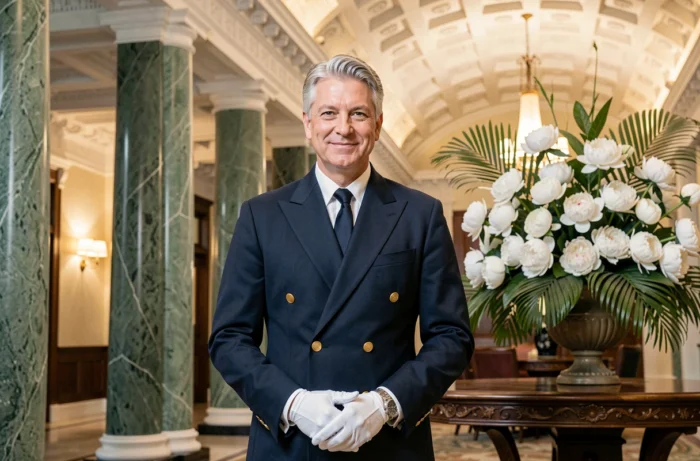
Operational criteria that separate a palace from the self-proclaimed “6 stars”
In France, the “palace” label awarded by Atout France is the only official distinction above 5 stars. It is based on a grid of measurable criteria: remarkable location, architectural heritage, quality of dining services, spa, and personalized services. Establishments that self-proclaim 6 stars internationally operate without this framework, making comparison complex.
We recommend relying on concrete indicators rather than the displayed star rating:
- The presence of a dedicated butler per suite, available at all times, as opposed to a simple concierge service shared among several floors
- The existence of an internal gastronomic offering led by a recognized chef, with a menu updated according to the seasons and traceable local sourcing
- An anticipatory personalization program (preferences remembered from one stay to another, adjustment of bedding, minibar, and lighting before arrival)
- Substantial private spaces: suite pool, non-shared terrace, direct access to a spa reserved for occupants of a certain room category
The staff-to-guest ratio remains the most reliable marker for assessing the actual level of an ultra-luxury establishment. A Parisian palace operates around 2 employees per occupied room. Addresses claiming the sixth star consistently exceed this threshold.
Burj Al Arab, Emirates Palace, Soneva Jani: anatomy of three distinct models
The Burj Al Arab Jumeirah embodies the spectacular model. Its sail-shaped architecture, suites spread over two levels, and multiple restaurants make it a destination in itself. The positioning relies on visible excess: ostentatious materials, transfers in Rolls-Royce or helicopter, luxury staging taken to its extreme.
The Emirates Palace in Abu Dhabi takes a different approach. The scale of the building, originally designed to host diplomatic summits, creates a monumental effect. The services are calibrated for a dual clientele: ultra-high-end leisure travelers and official delegations, which imposes a level of security and protocol rarely seen in classic hospitality.
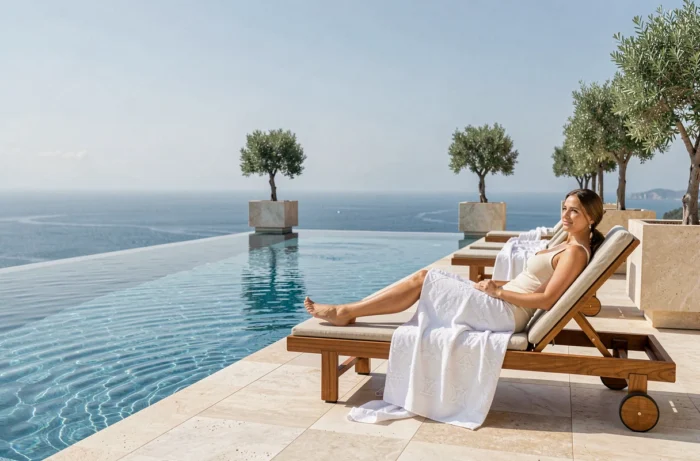
Soneva Jani in the Maldives represents the counter-model. Ultra-luxury here is expressed through scarcity rather than abundance: overwater villas with private slides descending into the lagoon, retractable roofs for sleeping under the stars, and a “no news, no shoes” philosophy that deliberately eliminates conventional markers of the grand hotel.
These three establishments illustrate that the sixth star does not designate a unique standard but three competing philosophies: spectacular opulence, institutional power, and radical minimalism.
Eco-luxury and isolated lodges: the new frontier of the ultra-premium segment
The ultra-luxury segment is undergoing rapid recomposition. Trend reports published by luxury travel advisor networks indicate a growing demand for isolated lodges located in natural reserves or preserved environments. This evolution redefines the codes: perceived value no longer resides in gilding but in geographic exclusivity and environmental commitment.
The Atlantis in Dubai has launched a program focused on sustainable tourism. In Southeast Asia, several eco-luxury resorts combine high-end accommodation with active protection of local biodiversity. Third-party sustainability verification, such as that obtained by some establishments from Forbes Travel Guide, becomes a differentiating argument against traditional star ratings.
High-net-worth travelers are increasingly turning to these remote addresses. The model of private lodges in Southern Africa or Scandinavia, with limited capacity to a few rooms and a nightly price that far exceeds that of an urban palace, is reshaping the hierarchy of hotel luxury. Self-proclaimed star ratings lose relevance against establishments that deliberately refuse any classification and bet on the rarity of the experience.
The sixth star remains a communication tool, not a guarantee of standardized quality. The establishments that claim it offer remarkable services, but the next generation of ultra-premium addresses may well completely abandon the language of stars in favor of a more tangible promise: a place, an ecosystem, limited access.