
A label “SIACI Saint Honoré” appears on your bank statement, in the form of a direct debit or transfer, without you recalling having signed anything with this entity. This situation is common, particularly among employees covered by a collective health or welfare insurance contract. Understanding the origin of this bank transaction requires tracing the chain that connects your employer, your insurance contract, and the organization responsible for collecting the contributions.
SEPA Mandate and Role of Delegated Manager: The Mechanism Behind the Direct Debit
Siaci Saint Honoré (now part of the Diot-Siaci group) is not an insurer in the strict sense. The company acts as a broker and delegated manager of collective contracts on behalf of companies, professional branches, or employer groups. Its role is to manage health, welfare, or retirement contracts subscribed by these entities.
When your employer establishes a mandatory supplementary health insurance, the employee’s share of the contribution can be directly debited from your bank account via a SEPA mandate. This mandate, which you likely signed upon hiring or when changing contracts, authorizes Siaci Saint Honoré to issue debit instructions to your bank.
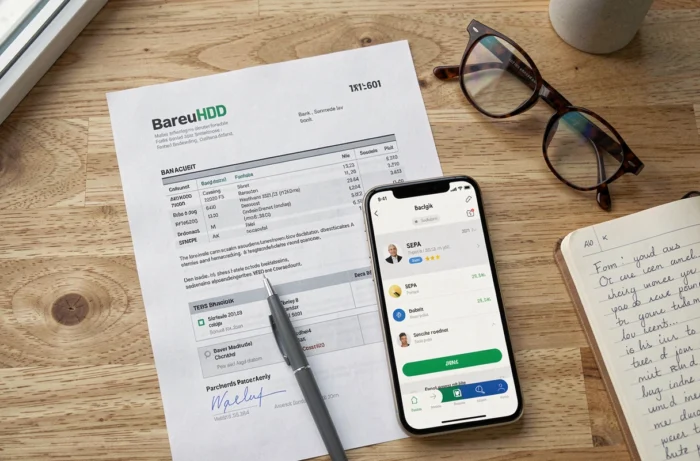
The official SEPA mandate document from Siaci Saint Honoré specifies that the right to reimbursement is exercised within eight weeks following the debit. This period, set by European SEPA regulations, applies to any authorized debit. For an unauthorized debit, the period extends to thirteen months.
Several sectors are particularly affected. HCR (hotels, cafes, restaurants) schemes and health contracts for temporary workers often go through this type of delegated management, which explains why employees in these sectors discover the SEPA debit from Siaci Saint Honoré without ever having had direct contact with the company.

Bank Label “VIR” or “Debit”: Two Different Transactions Not to Be Confused
A common point of confusion arises regularly. The label displayed on your statement can take two distinct forms: “PLV SIACI Saint Honoré” (debit) or “VIR SIACI Saint Honoré” (transfer). These two transactions do not go in the same direction.
A debit corresponds to a contribution deducted from your account. A transfer, on the other hand, indicates a reimbursement or adjustment in your favor. This could be an overpayment of contributions, a reimbursement of health expenses, or an adjustment related to a sick leave. The amounts vary from a few euros to several hundred euros depending on the nature of the transaction.
The distinction is crucial before taking any action. Contesting an incoming transfer is a matter of misunderstanding. Contesting an unrecognized outgoing debit falls under regulated banking rights.
Check the Origin of the Siaci Saint Honoré Debit: Concrete Steps
Before contacting your bank to block the transaction, several checks can confirm or refute the legitimacy of the debit.
- Check your payslip: the “mutual” or “welfare” line sometimes mentions the name of the manager or organization. If your employer subscribed through Siaci Saint Honoré, the link is established.
- Look for a SEPA mandate form in your hiring documents. The document bears the mention “SIACI SAINT HONORE SAS” with the address at 39 rue Mstislav Rostropovitch, 75815 Paris cedex 17, and the ORIAS number 07 000 771.
- Access the online client area of the Diot-Siaci group. Recent pages direct you to dedicated spaces where you can find active contracts, contribution schedules, and associated mandates.
- Contact your human resources department. In the context of a mandatory collective contract, it is the employer who chose the manager, and they have the contract references.
If none of these checks confirm the existence of a contract linking you to Siaci Saint Honoré, you can request a refund of the debit from your bank within the regulatory period of eight weeks. Beyond that, contestation remains possible for thirteen months if you prove that the mandate was never signed.
Contested SEPA Debit: What European Regulations Provide
The SEPA framework offers robust protection but is conditioned on adhering to deadlines. For an authorized debit that seems abnormal, the refund request must occur within eight weeks. Your bank is then obliged to refund without requiring detailed justification.
For a debit made without a valid mandate, the period extends to thirteen months. The burden of proof then rests with the creditor, who must demonstrate the existence of a signed mandate. In practice, the majority of contested Siaci Saint Honoré debits correspond to forgotten collective contracts rather than fraudulent operations.
Cases of truly unauthorized debits do exist, but field reports vary on their actual frequency. Caution recommends systematically checking before concluding fraud. An employee who has left a company may, for example, continue to see debits for a few months if the termination of the collective contract has not been communicated to the manager.
After Leaving the Company
The end of the employment contract does not automatically lead to the end of the debit. The portability of rights, provided by law, extends health and welfare coverage for a limited time. During this period, contributions may continue to be debited if the funding is not fully covered by the portability scheme.
If you notice a Siaci Saint Honoré debit several months after your departure, first check if you are still within the portability period before initiating a contestation. The HR department of your former employer or the Diot-Siaci client area can clarify the situation.
A readable bank statement begins with the identification of each line. When the label is insufficient, it is the cross-referencing between payslip, employment contract, and SEPA mandate that provides the answer.