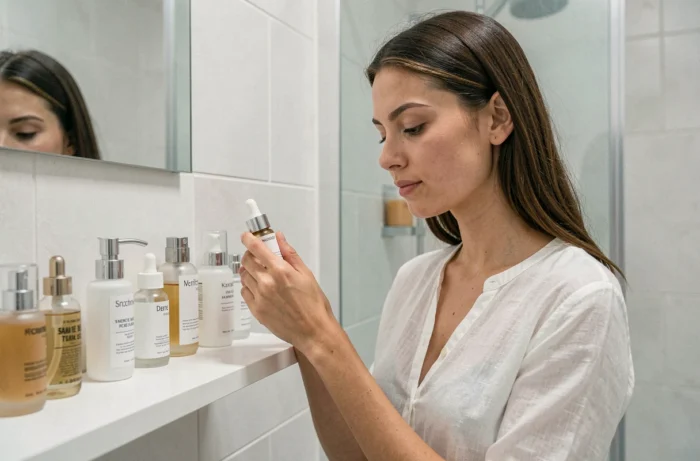
Typology has popularized minimalist skincare based on concentrated active ingredients, but the brand is not available at Sephora. For those looking for a similar approach (short formulas, targeted actives, affordable prices) in the store’s aisles, the real choice depends on measurable criteria: composition, number of ingredients, concentration of key actives, and compliance with new European regulations.
This article compares the brands available at Sephora that are closest to Typology’s philosophy, relying on formulation data and the current regulatory framework.
European Regulation on Retinol: What Changes for Products Sold at Sephora
The regulation (EU) 2024/996 redefines the limits of vitamin A in cosmetics. The total content of retinol equivalent is now capped at 0.3% for facial care (leave-on and rinse-off) and 0.05% for body lotions. Sunscreens and products intended for children under three years old can no longer contain it.
As of November 1, 2025, no new non-compliant products can be placed on the market in the European Union. Old stocks that have not been reformulated must be removed by May 1, 2027, at the latest.
This constraint directly affects retinol serums sold at Sephora, including those from The Ordinary or Estée Lauder. Several references are undergoing reformulation or transitioning to alternative actives like bakuchiol, retinal, or peptides. When looking for alternatives to Typology at Sephora, it is essential to check if the targeted product has already been adapted to this new framework.
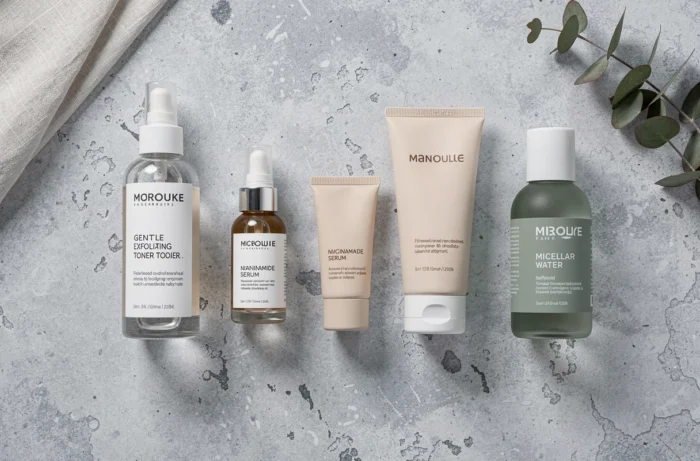
The Ordinary, Inkey List, Seasonly: Comparative Table of Alternatives Available at Sephora
Three brands distributed at Sephora share with Typology a focus on short formulas and clearly identified actives on the packaging. Their differences lie in the origin of the ingredients, pricing positioning, and certification.
| Criterion | Typology (not at Sephora) | The Ordinary | Inkey List | Seasonly |
|---|---|---|---|---|
| Origin | France | Canada (Deciem) | United Kingdom | France |
| Formulation Approach | Minimalist, concentrated actives | Mono-actives, short INCI | Mono-actives, educational formulas | Natural actives, clean beauty |
| Certification cruelty-free | PETA | Leaping Bunny | PETA | Not certified (vegan formulas) |
| “Clean at Sephora” Label | Not applicable | No | No | Yes |
| Typical Facial Serum Range | Large (hyaluronic acid, niacinamide, retinol, bakuchiol) | Very large (over 30 serums) | Medium (about 15 serums) | Limited (5-6 targeted serums) |
| Price Positioning | Entry-level | Entry-level | Entry-level | Mid-range |
The Ordinary remains the most direct substitute: the brand shares with Typology the principle of mono-active at a low price, with an even broader range. In contrast, Seasonly stands out for its compliance with the “Clean at Sephora” program, which excludes a list of controversial ingredients (sulfates, parabens, phthalates, certain UV filters).
The “Clean at Sephora” Filter as a Selection Criterion
The “Clean at Sephora” program requires participating brands to exclude more than 50 families of ingredients from their formulations. For someone accustomed to Typology’s clean compositions, this filter serves as a quick selection tool in-store or online.
The Ordinary and Inkey List are not included, which does not mean their formulas are problematic, but that some of their products contain ingredients on Sephora’s exclusion list. Seasonly, on the other hand, meets these filtering criteria.
Anti-Aging Serums at Sephora: Actives to Favor After Retinol Restrictions
The anti-aging serum represents the category where the post-regulation transition is most felt. Brands are reformulating around three families of actives:
- Bakuchiol, a plant-derived ingredient that mimics the effects of retinol without regulatory constraints or the risk of irritation. Typology already offered it in its range, and several Sephora references now include it.
- Retinal (retinaldehyde), a form of vitamin A that is more potent than retinol at equal concentration, which remains compliant with regulations as long as the 0.3% retinol equivalent threshold is respected.
- Biomimetic peptides, found in brands like Drunk Elephant or Paula’s Choice distributed at Sephora, which target firmness without using retinol.
For an effective anti-aging routine built at Sephora, the choice between these actives depends on skin tolerance. Bakuchiol is suitable for sensitive or reactive skin. Retinal offers faster results on established wrinkles but requires a gradual introduction.
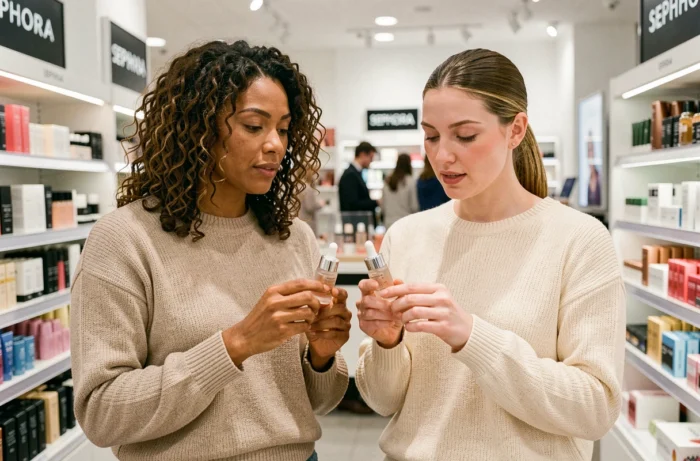
Complete Routine at Sephora: Reproducing the Typology Approach in Three Steps
The effectiveness of Typology relies less on a miracle product than on a short protocol. Reproducing this logic at Sephora involves limiting the number of references and choosing complementary actives rather than redundant ones.
Cleaning and Hydration: The Basics
A gentle sulfate-free cleanser (like Inkey List or CeraVe, available at Sephora) followed by a hyaluronic acid-based moisturizer covers the fundamental needs. Two products are sufficient for the daily base, exactly as Typology recommends in its protocols.
Targeted Serum: The Differentiating Product
The serum is where personalization comes into play. The niacinamide serum from The Ordinary targets pores and excess sebum. The bakuchiol serum from Seasonly addresses the first signs of aging without irritation. Choosing a single active serum per routine, applied in the evening, avoids ingredient interactions and simplifies the protocol.
The multiplication of actives in the same routine is the most common trap. A well-chosen active used regularly produces more results than three alternating serums without coherence.
The minimalist skincare market at Sephora has been structured around brands that follow the same logic as Typology, with slightly different positions on price, certification, or active range. The European regulation on retinol accelerates this convergence towards more transparent formulations. The most reliable criterion for making a choice remains the product’s INCI list, not the accompanying marketing discourse.