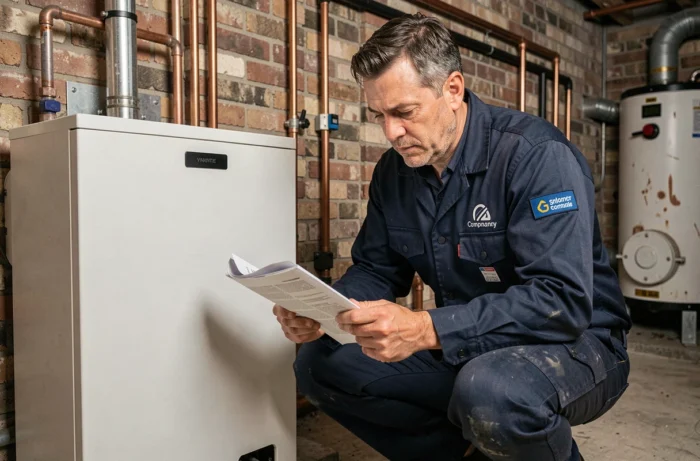
Since June 1, 2025, the Brussels-Capital Region prohibits the installation of new oil boilers. This ban also covers the replacement of an existing oil boiler with an identical model. Installations already in service remain usable, provided they are maintained and inspected annually according to the energy performance regulations. Any owner facing a definitive breakdown must now choose another energy source.
Mandatory Energy Performance Certification after Boiler Replacement in Brussels
One aspect that traditional guides overlook: any new boiler installed as a replacement (gas, heat pump, or hybrid) must undergo an Energy Performance Certification after commissioning. This technical check verifies the compliance of the device, the connection to the flue ducts, and the actual energy efficiency of the installation.
The Energy Performance Certification is not a mere administrative formality. Without it, the installation is considered non-compliant, which can pose problems during a sale or regional inspection. The certified technician issues a certificate confirming that the new device meets the current Brussels requirements.
To understand what has changed for heating in Brussels since the ban came into effect, the regulatory timeline deserves to be read in detail, particularly regarding possible exemptions.
Collective Flue in Buildings: The Overlooked Technical Constraint
In apartment buildings equipped with a collective flue, the replacement of an individual oil boiler is not done freely. The choice of the new device depends on the type of existing flue and its compatibility with other boilers connected to the same flue.
Since January 1, 2025, owners of a boiler or an atmospheric water heater (type B11BS) connected to a collective flue must conduct a feasibility analysis to consider its replacement. They must also provide a list of equipment connected to this flue since January 1, 2019.
This obligation transforms what seems to be an individual choice into a collective decision. A co-owner cannot install a condensing boiler on a collective flue designed for atmospheric devices without checking technical compatibility. The risk: backflow of combustion gases to neighbors.
Feasibility Analysis: What It Involves Practically
The analysis evaluates the possibility of lining the existing flue, installing a separate flue on the façade, or switching to a centralized system. The report conditions the type of device allowed for each apartment in the building.
For condominiums, this step requires a passage in a general assembly and an agreement on the chosen solution. The time between a boiler breakdown and its actual replacement can therefore extend by several weeks in this context.
Alternatives to Oil: Condensing Gas, Heat Pump, or Hybrid System
Three solutions dominate replacement projects in Brussels. Each responds to different building constraints.
- The condensing gas boiler remains the most common option in existing homes. It utilizes the natural gas distribution infrastructure already present in most of the Brussels territory and requires limited modifications to the radiator network.
- The air-water heat pump is suitable for single-family homes with outdoor space for the unit. Its efficiency depends on the building’s insulation: in a thermal sieve, electricity consumption can negate the expected benefit.
- The hybrid system combines a heat pump and a gas boiler. The heat pump takes over when outdoor temperatures allow, while gas kicks in during extreme cold. This configuration reduces dependence on gas without requiring extensive renovation of the building’s envelope.
One point not to overlook: projects consisting solely of new or equivalent energy performance units can no longer install natural gas boilers. This restriction, in effect since January 2025, pushes new constructions toward heat pumps or connection to a heat network.
Decommissioning the Oil Tank: Rules to Follow
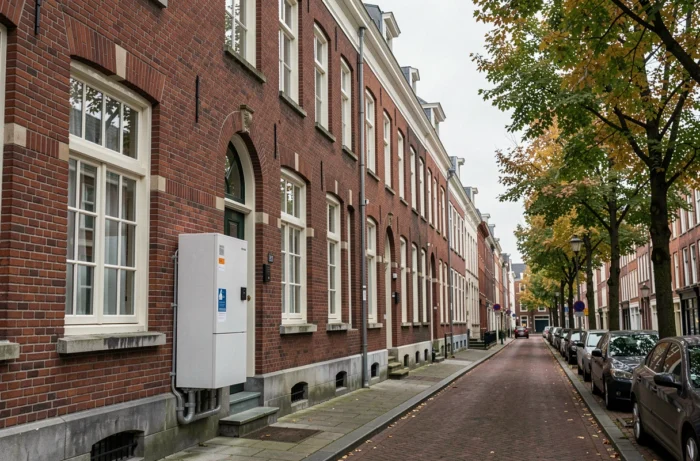
The replacement of the boiler does not close the case. The oil tank, whether buried or in a basement, must be treated according to strict environmental rules when decommissioned.
The procedure involves complete emptying, degassing by a certified professional, and, in the case of a buried tank, checking for soil contamination. A decommissioning report must be kept. The costs of this step vary depending on the size of the tank and its accessibility, but they represent a budget item that many owners discover late in the project.
Wood Stoves and Boilers: Mandatory Ecodesign Standard
For those considering wood as an alternative, only stoves and boilers compliant with the European Directive 2009/125 on ecodesign can be installed since January 2025. Non-compliant second-hand devices are excluded. This standard ensures a minimum energy efficiency and limits fine particle emissions.
Renolution Grants and Financing for Replacement in Brussels
The Renolution program, which grouped regional aids for energy renovation, has seen its grants suspended since January 2025. This suspension complicates financing for replacements, particularly for low-income households that relied on these aids to absorb the additional cost of a heat pump.
The situation remains fluid. Owners should regularly check the status of the scheme with Brussels Environment before starting work. A planned replacement also allows for comparing multiple quotes and avoiding the urgency of a winter breakdown, where intervention times lengthen and prices rise.
The Brussels regulatory framework clearly pushes toward abandoning oil, but the transition remains conditioned by the type of building, the connection method to the ducts, and the availability of financial aids. For condominiums connected to a collective flue, the feasibility analysis constitutes the first concrete step before any replacement choice.