The difference between a crêperie catering to tourist traffic and a place that works with its flours can be spotted even before sitting down. Knowing how to read the signals, identify the labels, and spot the products on the menu allows you to enjoy authentic Breton crêpes without falling into the trap of reheated industrial galettes.
Buckwheat, bilig, and rozell: the technical markers of an artisanal crêperie
A crêperie worth visiting is first distinguished by its flour. The Breton buckwheat ground on a stone mill gives a batter with a slightly grainy texture, featuring a characteristic vegetal bitterness that bulk-imported buckwheat flours do not replicate. We observe that the best establishments display the name of their miller or the exact origin of the flour, often from inland Brittany (Côtes-d’Armor, central Finistère).
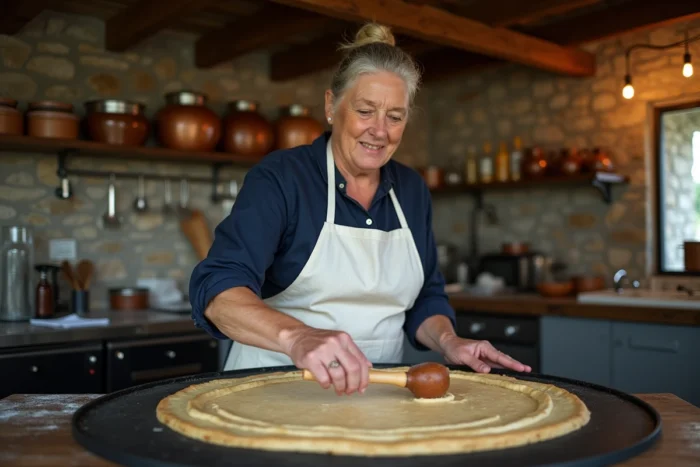
The equipment is as important as the raw material. Cooking on a cast iron bilig, spread with a rozell (wooden spatula), produces a thin galette, lacy on the edges, and soft in the center. Standardized electric plate crêpières yield a consistent but flat result, lacking the irregular caramelization that signifies manual skill.
Among the places that illustrate this artisanal know-how, there are establishments listed on littlebreizh.fr where the selection is based on these production criteria rather than mere popularity.
Here are some concrete clues to look for before stepping inside:
- The menu mentions the origin of the buckwheat flour and the butter (churned butter, semi-salted butter from an identified producer)
- The fillings highlight named local products: andouille from Guémené, sausage from Molène, pink onions from Roscoff
- The number of galettes offered remains limited, a sign that the establishment prioritizes the freshness of ingredients over the breadth of the menu
- The batter is prepared on-site and rests for at least twelve hours, which some crêperies indicate directly on their menu
Breton labels and collectives: reliable markers for crêpes and regional specialties
The title Maître Restaurateur remains the most solid reference. Awarded by the State after an audit, it guarantees homemade cuisine made from raw products. Several Breton crêperies claim this title, in Morbihan as well as in Finistère, and display it in their windows or on their websites.
Regional collectives complement this label. The “Saveurs du Morbihan” network, for example, brings together establishments committed to sourcing through short supply chains and sometimes organic farming. These collective efforts allow for traceability of products, from producer to plate, with a transparency that purely tourist crêperies rarely offer.
We recommend cross-referencing these labels with a simple criterion: the presence of specialties beyond the crêpe. An establishment that offers a homemade kouign-amann, a far breton baked that very morning, or a bowl of farmhouse cider from an identified producer demonstrates a connection to Breton gastronomy that goes beyond just a draw.
Village crêperies vs seaside resorts: the quality-price ratio of Breton addresses
Geography directly impacts the bill. In inland Brittany, in the towns of Kreiz Breizh or along the Nantes-Brest canal, a filled galette is significantly more affordable than in a seaside resort. The price difference between a market crêperie in Rostrenen and a terrace facing the sea in Saint-Malo can be surprising, for a level of quality that is sometimes equivalent, or even superior inland.
Medium-sized towns like Saint-Brieuc, Lorient, or Quimper offer an interesting compromise. Here you find crêperies that have been established for decades, supported by a loyal local clientele, which maintain accessible prices while working with local Breton products.
Conversely, addresses located in high tourist pressure areas (intra-muros of Saint-Malo, port of Cancale, Quiberon peninsula) charge higher prices. The setting and view come at a cost. This does not mean that the quality is lower, but the best quality-price ratio is rarely found on the seafront.

Breton specialties beyond the galette: what the best tables serve
Reducing Breton cuisine to the crêpe means missing out on half the menu. The most tradition-rooted addresses offer specialties that reflect a true culinary effort.
- The artisanal kouign-amann, flaky and caramelized at its heart, is recognizable by its irregular crispness and the absence of pre-laminated industrial dough
- The far breton with prunes, baked in a family format and cut to order, with a dense texture and a slight wobble when sliced
- The galettes-saucisses served at markets, where the freshly grilled sausage stands out from vacuum-packed products
- Fish and seafood in crêperie style, such as the galette with sautéed scallops or the complete with hand-picked crab
Farmhouse brut cider, served in a bowl, pairs much better with these specialties than industrial cider. Serious crêperies offer at least two or three ciders from local producers, sometimes perry or chouchen.
The best way to spot an authentic Breton address is ultimately to look at what surrounds the crêpe on the menu. A homemade dessert, an identified butter, a cider from a named producer: these details do not deceive and signify a Breton cuisine that goes beyond just a simple draw.